
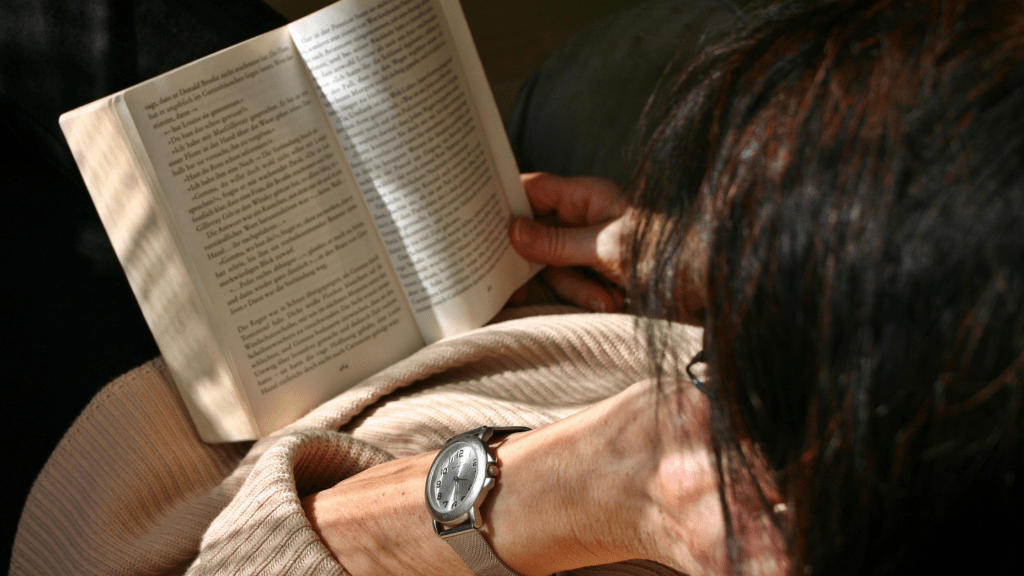
Let’s talk about one of the incredible benefits of reading fiction—its ability to make us more empathetic. While we often think of books as a form of entertainment, – or escapism – research has shown that diving into the world of a novel can actually help us better understand the emotions and perspectives of others.
The Science Behind It
There’s been plenty of research into how reading fiction affects the brain, and one of the key findings is that reading about fictional characters can improve our ability to empathise with real people. In fact, a study published in the journal Science (Kidd & Castano, 2013) found that reading literary fiction, in particular, can enhance a reader’s ability to understand and navigate complex social relationships. This is because fiction often requires us to step into someone else’s shoes, whether it’s the hero, the villain, or even the side characters. By engaging with these different perspectives, we’re forced to think about what others might be feeling or experiencing.
When we read, we’re not just observing the characters; we’re immersing ourselves in their thoughts and emotions. This process activates the same parts of our brain that we use when we interact with people in real life. Essentially, fiction serves as a kind of empathy exercise, helping us practise understanding others’ emotions in a safe and controlled environment.
Emotional Complexity and Empathy
Fiction, particularly genres like dark fantasy or literary fiction, presents characters with complex, often conflicting emotions. We see morally ambiguous characters struggling with tough choices, and we’re challenged to empathise with them, even when we don’t agree with their actions. It’s this emotional complexity that encourages us to think more deeply about human behaviour.
Take a character like Olira from Lion of Zarall (shameless plug!). She’s tough, hates the slave trade, but is forced to make difficult – morally grey – decisions for her family’s wellbeing – including chaining Lion in a barn and keeping him in a wakeful paralysis state throughout an extremely painful medical procedure! By following her point of view journey, readers are invited to understand her inner conflicts and motivations. Characters like Olira force us to look at the grey areas of morality, which is a big part of developing empathy. We learn that people are rarely all good or all bad, and that understanding the nuances of their actions requires emotional intelligence and compassion.
Fiction and Real-World Empathy
So, how does all this reading about fictional characters translate into real life? According to research from the University of Toronto (Mar, Oatley, & Peterson, 2009), the more fiction we read, the better we become at interpreting the emotional states of the people around us. This is because fiction teaches us to pay attention to subtle emotional cues, body language, and underlying motivations—skills we can use in our everyday interactions.
Think about the last time you read a deeply emotional scene in a book and felt a pang of sympathy or understanding. That ability to “feel” what a character is going through translates to real-world empathy. The more we read, the more we learn to understand people whose experiences may be vastly different from our own.
So next time you pick up a novel, remember that you’re not just in for a good story—you’re also doing some serious empathy work.
 Eddy Rose
Leave a comment